| Field | Details |
|---|---|
| Movie Name | L’Âge d’or (1930) |
| Director | Luis Buñuel |
| Writer | Luis Buñuel, Salvador Dalí |
| Lead Actor | Gaston Modot |
| Cast | Gaston Modot, Lya Lys, Caridad de Laberdesque, Max Ernst, Lionel Salem |
| Genre | Comedy, Fantasy, Romance |
| Release Date | November 28, 1930 (France) |
| Duration | 1h 3m (63 min) |
| Budget | Not publicly disclosed |
| Language | French |
| IMDb Rating | 7.4/10 |
L’Âge d’or (1930)
A lot of people were upset earlier this year with the ultra conservative piety offered by Mel Gibson in his The Passion of the Christ Letters were written, ecumenical and Jewish groups spoke out, journalists interviewed patrons, critics took sides. It constituted a contretemps, I suppose, but if Gibson thinks he was persecuted, I direct him to the historical moment, in 1930, when Luis Buñuel’s first feature film L’Âge d’or was loosed on an apparently unprepared Paris.
Letters were written then too, but, additionally, the police stormed the theater, patrons endeavored to set it aflame, Surrealist art works in the lobby were destroyed, and the film’s producer was threatened with excommunication by the Vatican. Personally, I’d choose the tough questions from Diane Sawyer.
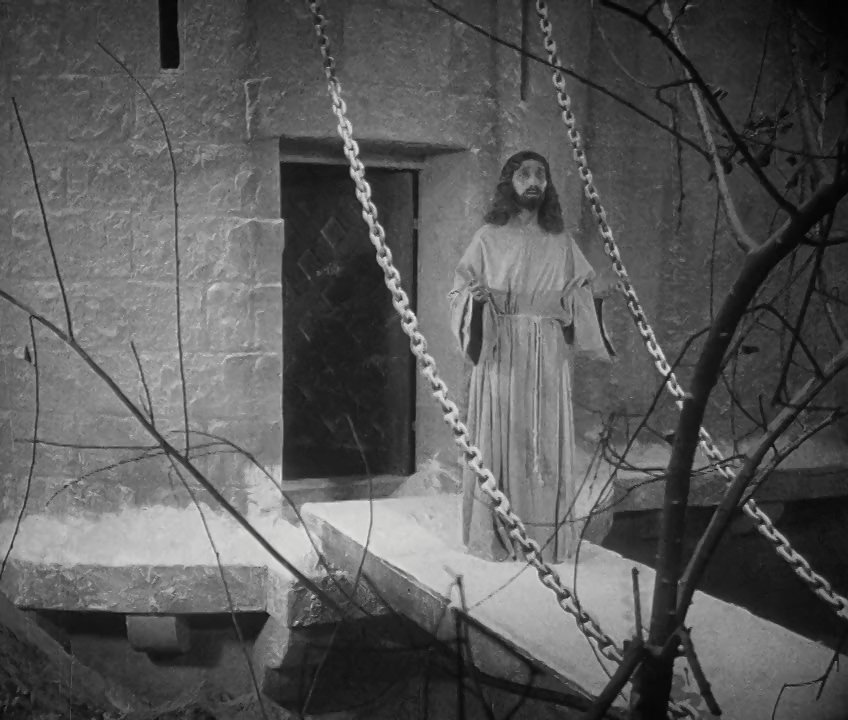
Of course, ultra-conservative piety was never the problem with Buñuel. On the contrary. Today, more than twenty years after his death, he remains cinema’s most gleeful blasphemer, and in L’Âge d’or his contempt for the church found its most straightforward representation. Pauline Kael described the picture as “deliberately, pornographically blasphemous,” a summation that cannot be improved upon; an example of Buñuel’s heresies might include the concluding sequence in which Jesus is written into the same Marquis de Sade material that served as the basis for Pasolini’s Salò, or The 120 Days of Sodom, and there are many more. (The woman for whom the film was commissioned was, incidentally, a direct descendent of the Marquis’s.)
But even if L’Âge d’or had ended with the Resurrection, the public would likely have stormed the screen. Buñuel and artist Salvador Dali, who collaborated with him on the film’s script, were adherents of the Surrealist movement that was the style of the moment in the Paris art world in 1930, and in L’Âge d’or they created an obstinately irrational attack on social mores. Like all Surrealists, Buñuel and Dali were preoccupied with the irrational with the logic of dreams and the subconscious and armed with suitably free-associative imagery, they illustrate, in L’Âge d’or, how it is that society stands in the way of man’s most basic pursuits.
In L’Âge d’or these basic pursuits are largely characterized by lust. You may have noticed that I haven’t provided a plot synopsis of L’Âge d’or. The reason is that no one could. I can say that a rough outline of the film would include the information that a passionate young man (Gaston Modot, who had the good fortune to appear in that other touchstone of cinematic outrage The Rules of the Game) falls in love with or perhaps already was in love with a similarly passionate young woman (Lya Lys). This love finds outlets deemed by society and the church to be inappropriate the woman, dreaming of her lover, sucks the stone toe of a statue at a garden party, to use one rather benign example and society in turn takes every measure to keep them apart.
To watch more movies like L’Âge d’or (1930) visit Putlocker.
Also Watch